
Hero ESP for ranked pubs
Hero ESP removes fog blackouts. Used well, it cuts surprise deaths and improves dives, farms, and rotations. Used poorly, it is just more noise on screen.
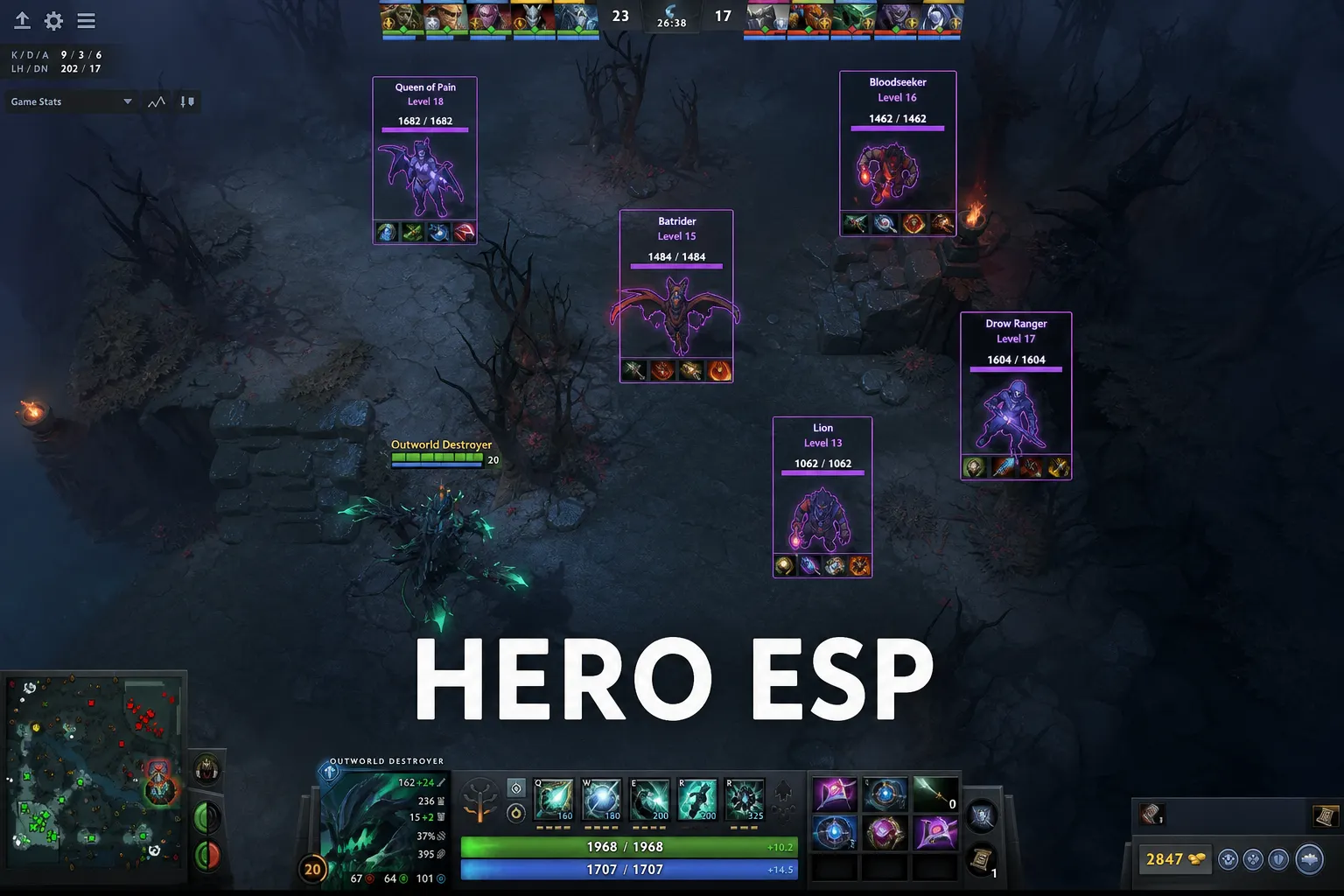
What Hero ESP Actually Changes in Ranked Pubs
Hero ESP is one of those features that sounds simple on paper and is genuinely transformative in practice: it shows enemy hero positions through fog of war, usually alongside level and item context, instead of leaving you to guess based on the last time you saw someone on the minimap. In ranked pubs specifically, where communication is inconsistent and half your team is not pinging anything useful, that single change removes a huge share of the "how did that happen" deaths that decide games.
It is worth being precise about what ESP does and does not do, because overselling it helps nobody. ESP does not win fights for you. It does not aim skillshots. It does not make you mechanically better at last hitting or combo execution. What it does is compress the time between "something might be wrong" and "I know exactly what is wrong," which is a decision-making advantage, not a mechanical one. Players who treat it as a decision-making tool improve fast. Players who expect it to replace game sense stay stuck at the same rank with a slightly nicer overlay.
The rest of this guide is organized around the actual moments in a match where that decision-making advantage shows up: laning, the midgame transition, late-game objectives, and the habits that turn raw information into climbing MMR instead of just watching dots move around a map.
Lane Stage: Reading Support Rotations and Mid Pressure
The laning stage is arguably where ESP has the highest return on attention, precisely because so little of it is visible under normal circumstances. Enemy supports leaving lane to gank, an offlaner walking a wide arc to appear behind your safe lane, a mid player abandoning their lane the moment their bottle runs dry to look for a kill elsewhere: all of these are invisible to normal vision until the gank is already happening. ESP shortens the gap between "something feels off" and "I should back off the lane right now" from several seconds to nearly instant.
Concretely, this looks like checking hero positions every time you go to last hit near the tree line, every time you consider pushing a wave out, and every time the enemy support you were tracking disappears from your screen. If you can see that support is now halfway to your safe lane, you back off before the stun lands instead of after. That single habit, repeated across a full laning stage, is worth several deaths avoided per game on average.
ESP is equally useful offensively during laning. Knowing that the enemy hard support just walked toward the enemy jungle to stack, rather than staying on lane to peel, is exactly the window an aggressive lane needs to force a kill. Information cuts both ways: it protects you from ganks and it tells you when the enemy lane is temporarily undefended.
Mid Game: Farming Patterns and Jungle Stacks
Once laning ends and the map opens up, the value of ESP shifts from "avoid this specific gank" to "understand the overall shape of where both teams are farming." This is the stage where players without map information tend to wander into three stacked heroes in a jungle camp that "just happened" to be occupied, when in reality it was a fully visible setup the entire time.
Use ESP here to build a mental model of tempo. If three enemy heroes are showing on the top half of the map and your team is about to contest a bottom-side objective, that is a green light. If the enemy carry is missing from farm entirely and nobody on your team has seen them in ninety seconds, that is a signal to slow down rather than greedily push a lane alone. The overlay is not making the decision for you; it is giving you the raw inputs a good decision requires.
This is also the stage where map awareness habits start to matter as much as the tool itself. ESP shows you dots. Map awareness is the skill of actually glancing at those dots on a consistent, repeated cadence instead of tunnel-visioning on your own hero for ninety seconds at a time. The tool and the habit are meant to reinforce each other, not substitute for one another.
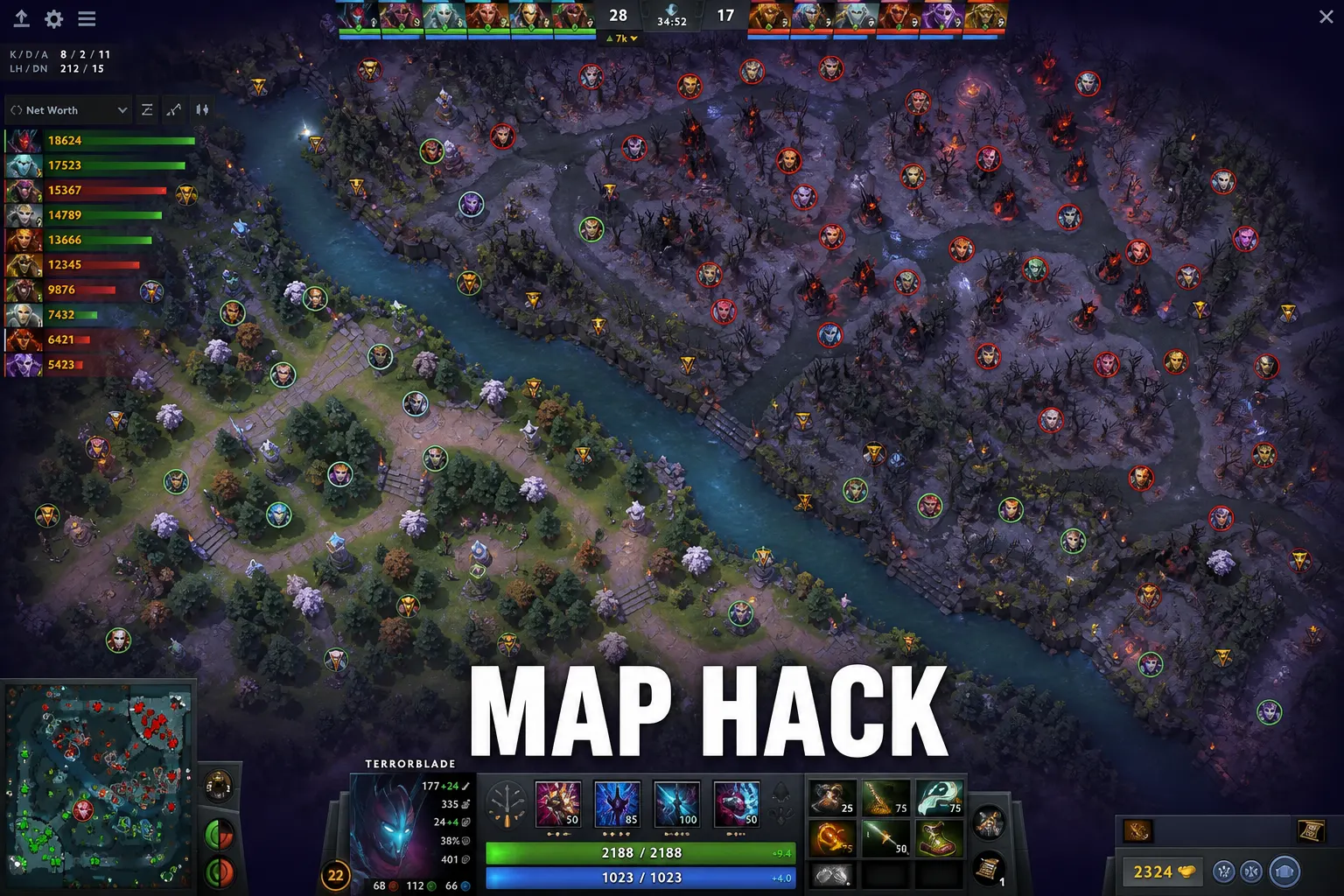
Late Game: High Ground and Roshan Calls
By the late game, mistakes are expensive in a way they simply are not earlier. A missed rotation at minute six costs a tower plate. A misread at minute thirty-five can cost the game outright. High ground pushes and Roshan attempts are exactly where accurate hero location data matters most, because both scenarios revolve around a binary question: is it actually safe to commit right now, or are we about to walk into a five-man ambush.
Pair hero position data with the Roshan timer guide before every pit attempt. Knowing where enemy heroes are is only half of a safe Roshan call; knowing when Roshan is actually up, and whether the enemy is likely also tracking that timer, is the other half. The two pieces of information together turn a coin-flip pit attempt into an actual calculated read.
High ground pushes work the same way. Before committing siege creeps and cooldowns to a push, confirm that the defending team's core damage dealers are actually present to defend rather than split-pushing the other lane. ESP answers that question directly instead of leaving it to a guess based on how long it has been since someone was last seen.
Inventory Context: Reading Items, Not Just Position
Position alone is only part of the picture. Item context is what turns "I see an enemy hero" into "I know whether engaging this hero right now is a good idea." A support standing alone in the jungle with a completed Blink Dagger and Force Staff is a very different threat than the same hero with no items past boots. Reading inventory alongside position is the difference between a confident dive and a blind one.
This matters most in decisions around isolating a single enemy hero. Before committing your own cooldowns to a pick-off attempt, glance at what they are actually holding. A completed Black King Bar changes the entire fight plan. A Linken's Sphere means your first hard disable gets eaten for free unless you bait it out first. None of that is visible through normal fog, and guessing wrong here is one of the more common ways a "free kill" turns into a lost teamfight instead.
The same logic applies in reverse when you are the one being hunted. If you can see that the enemy initiator has not finished their core item yet, that is useful information about how hard they can actually commit to a fight right now versus in two more minutes.
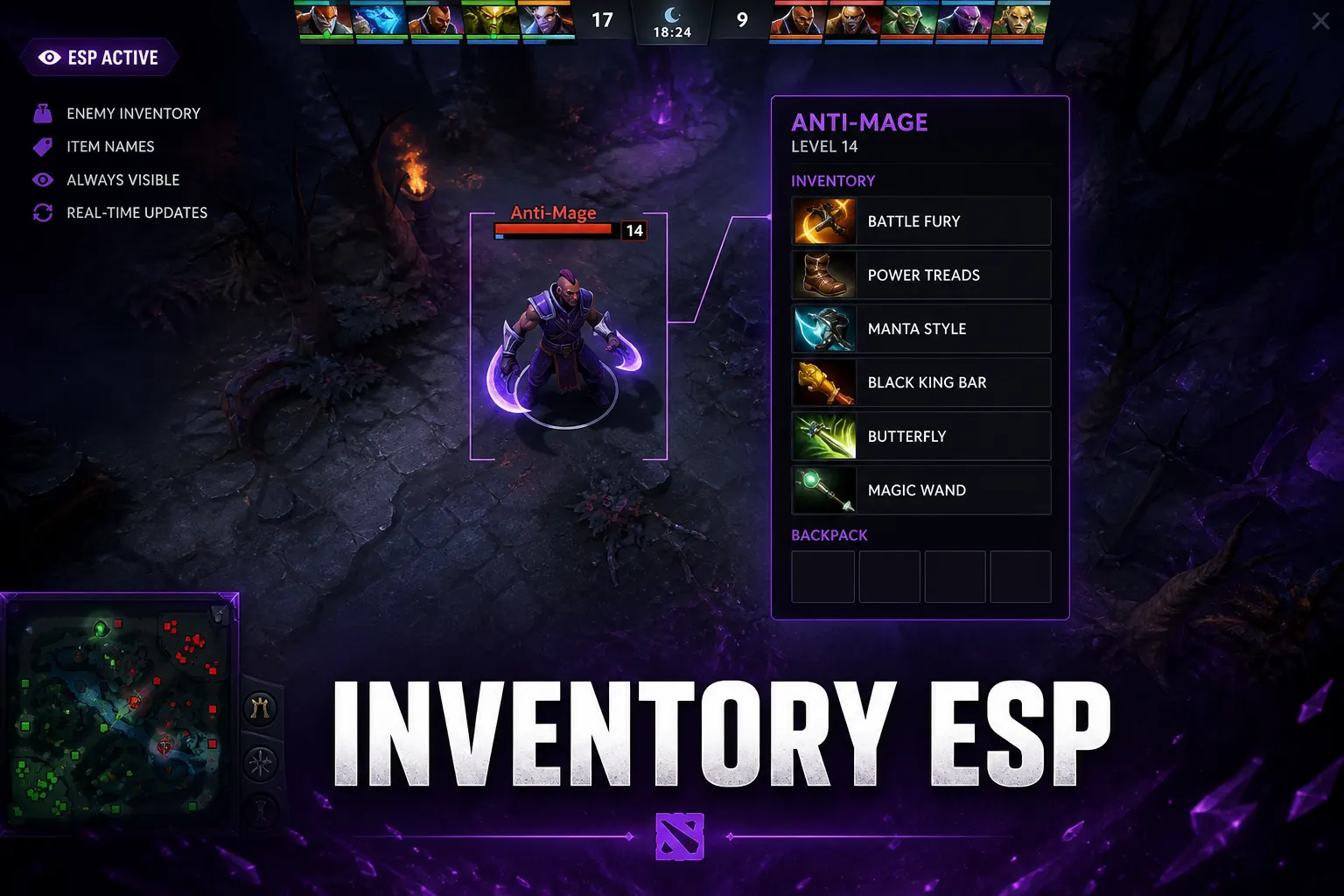
Diving Decisions: When to Commit and When to Back Off
Diving under a tower, into a smoke, or into a group of heroes clustered near a jungle camp is one of the highest-variance decisions in any given game. Done correctly, it snowballs a lead into a rout. Done incorrectly, it hands over a fully avoidable teamfight and a wave of momentum to the other team. ESP is most valuable here as a filter that catches bad dives before they happen, not as a green light generator.
A useful mental checklist before any dive: how many enemy heroes are unaccounted for on the map right now, what does the target's inventory suggest about their ability to fight back or escape, and what cooldowns does your own team have available to finish the dive quickly rather than get stuck trading damage under a tower. If two or more of those answers are unfavorable, the dive is probably not worth the risk even if the kill looks tempting on paper.
The players who improve fastest with ESP are the ones who use it to say "no" more often, not just "yes." Removing three bad dives per game usually matters more to your win rate than successfully landing one extra good one.
Farming Safely With Full Map Information
Farming efficiency and farming safety are usually presented as a trade-off, but map information narrows that trade-off considerably. A carry who knows exactly where all five enemy heroes are can push a wave, take a camp, and stack the next one with real confidence instead of constantly glancing at the minimap and guessing. That confidence translates directly into more net worth per minute over the course of a match.
The habit to build here is treating every unaccounted-for enemy hero as a small tax on your farming route. If four enemies are visible and one is missing, that missing hero is either recalling, buying back, or setting up somewhere specific, and a smart farming route routes around the areas that hero is likely to threaten rather than ignoring the gap entirely. This is a small mental adjustment that compounds heavily over a thirty-five minute game.
It is also worth resisting the temptation to farm greedily just because the map looks clear. A clear map is a snapshot, not a guarantee, especially against smoke ganks. Combine position data with normal ward coverage rather than replacing wards entirely, which the next section covers directly.
Rotation Timing: Turning Information Into Tempo
Good rotations are a timing problem as much as a positioning one. Knowing where an enemy carry is farming is only useful if you also know when your own cooldowns, buyback, and travel time line up to actually punish that position before it changes. ESP gives you the "where." Your own game sense has to supply the "when" and the "with what."
A simple framework: before committing to a rotation, confirm the target is actually isolated and not simply standing near an ally who is off-screen or behind a treeline. Confirm your own team has enough damage or control queued up to finish the kill quickly rather than trade a long, loud fight for no kill. And confirm that rotating does not leave your own lane or objective dangerously exposed in the process. Skipping any of those three checks is how a "free rotation kill" turns into a lost tower on the other side of the map.
Practicing Without a Permanent Crutch
A fair and common concern is that leaning on an overlay for information will stunt the underlying game sense that eventually needs to exist independent of any tool. The way around that is deliberate, structured practice rather than passive reliance. Spend a stretch of games, roughly a week of regular play, actively using ESP while mentally noting every single time it revealed something you would have otherwise missed. Write those moments down if you can, even briefly.
After that stretch, play a handful of games trying to replicate the same checking habits, the same "where is everyone right now" cadence, with less dependence on the overlay confirming your reads. You will likely notice that many of the reads you were making were already achievable through better minimap discipline and pattern recognition; the tool simply made the pattern more visible faster while you built the underlying instinct. The goal across this whole process is better decision-making that eventually generalizes, not a permanent crutch you never actually understand.
This matters even from a purely selfish improvement standpoint. Players who understand why a read was correct improve their overall game sense. Players who just react to dots on a screen without understanding the underlying pattern plateau much faster, tool or no tool.
Pairing ESP With Cooldown Tracking and Vision
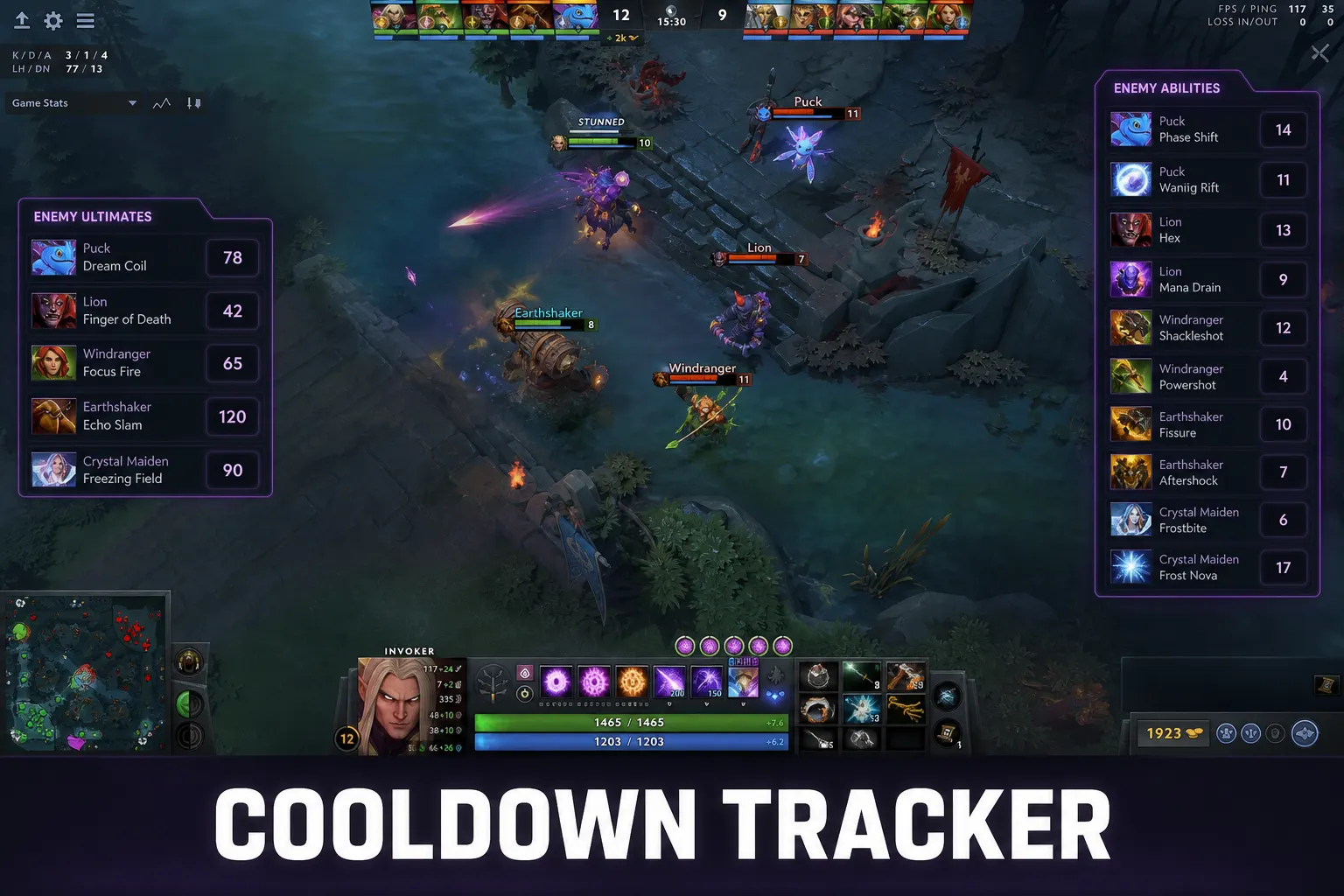
ESP by itself answers "where." It does not answer "what can they do to me right now" or "what parts of the map are actually dark to both teams." Those two questions come from cooldown tracking and vision respectively, and treating all three as one connected system is where the real skill ceiling lives.
Seeing an enemy hero standing near you is only half useful if you do not also know whether their stun, their escape, or their ultimate is on cooldown. The cooldown tracking guide covers how to layer that information on top of raw position data so a dive decision accounts for what the enemy can actually do to punish you, not just where they happen to be standing.
Vision works the other direction. ESP shows hero positions to you specifically; it does not create actual team vision for allies who are not running the same setup, and it does not replace the strategic value of ward placement for denying enemy vision of your own position. The ward vision guide and the map awareness guide cover how to keep placing wards with intent instead of assuming personal information removes the need for team-wide vision control.
Common Mistakes Players Make With ESP
The single most common mistake is checking the overlay once and then tunnel-visioning on a fight or a farm route for the next thirty seconds without checking again. Information decays fast in DOTA 2. A hero who was farming top a moment ago can be halfway across the map by the time you actually act on outdated information. The fix is simple but requires discipline: glance at hero positions on a consistent, short cadence, not just when something already feels wrong.
The second common mistake is overcommitting purely because a target looks isolated, without checking item context or nearby smoke potential. A visible, isolated hero can still be full health with a Black King Bar and backup half a screen away in fog. Treat position as one input among several, never the entire decision by itself.
The third mistake, more subtle, is using the information passively instead of communicating it. Calling out "two missing, likely rotating bottom" to your team converts personal information into team-wide tempo. Sitting on that information silently while your teammates walk into an avoidable gank wastes the single biggest advantage the tool provides.
Role by Role Examples
Different roles get value from ESP in slightly different ways, and it helps to think through your specific role rather than applying a single generic approach across all five positions.
- Carry (position 1): Use it primarily for farming safety and knowing exactly when a lane is safe to push for the next wave versus when to reroute the farming path entirely.
- Mid (position 2): Use it to track the enemy mid's rotation timing and to identify exactly when a gank on your own lane is coming so you can play the wave defensively in advance.
- Offlane (position 3): Use it to time your own aggressive rotations onto the enemy safe lane and to know when the enemy is grouping to punish your greedy farm patterns.
- Soft support (position 4): Use it to set up smoke ganks with confidence and to avoid walking a support cooldown into a fight that was never actually winnable.
- Hard support (position 5): Use it to time ward placement and rotations around where the enemy supports actually are, rather than warding blindly on a fixed pattern every single game.
Reading Missing Heroes as Information
A hero you cannot currently see is not a neutral piece of information, it is an active signal that deserves the same attention as a hero you can see. New players tend to focus entirely on visible threats and mentally discard anyone who has dropped off the map, when in reality the missing hero is very often the one about to change the outcome of the next fight. Building a habit of consciously noting who is unaccounted for, rather than only tracking who is currently on screen, closes one of the biggest gaps between intermediate and advanced map reading.
A useful mental exercise: at any given moment, you should be able to name, even roughly, where all five enemy heroes are or when you last confirmed their position. If two or three names come up blank, that uncertainty should actively lower your team's risk tolerance for the next few minutes, whether that means delaying a push, playing a lane more conservatively, or simply asking a teammate to check a specific area with a scout or a ward. Missing heroes are not automatically dangerous, but treating them as automatically safe is how ganks happen.
This pairs directly with timing patterns. A support who vanished right after your team's last ward expired is a different risk than one who vanished immediately after buying back from a death. Combining position history with basic game state awareness turns "missing" from a vague shrug into an actual, actionable read.
ESP in Team Fights: Positioning Reads
Once a fight actually starts, ESP shifts from a planning tool into a live positioning aid. Knowing where the enemy support with the key disable is standing, relative to your own front line, changes target priority decisions in real time. A hard support hovering at the back edge of a fight, out of your melee carry's immediate reach but well within a ranged nuke's range, is a very different target priority call than the same hero standing exposed at the front.
During chaotic team fights, especially ones with multiple area-of-effect spells and visual clutter on screen, it is easy to lose track of exactly where a specific priority target has repositioned to mid-fight. Glancing at hero position data during these moments, without losing focus on your own character's execution, is a skill that improves with repetition. Start by using it primarily to confirm kill targets are still where you think they are before committing a long-cooldown ultimate, since wasting a game-defining spell on a target that already repositioned is one of the more punishing mistakes at any skill level.
It is also worth using positioning data to judge disengage timing. If the fight is going poorly and two enemy heroes you thought were engaged are actually flanking from an unseen angle, that is exactly the kind of read that turns a survivable retreat into a clean one instead of a chase that costs your whole team.
Building a Pre-Game Checklist Habit
Consistency is what separates players who genuinely benefit from ESP over a full season from players who use it occasionally and get inconsistent results. A short pre-game and in-game checklist habit makes the difference. Before the draft even locks in, glance at what tools and information you will have available and think briefly about how your role plan should account for it. During the game itself, build a rhythm: check hero positions before every last hit near a tree line during laning, before every camp you take during the midgame, and before every objective commitment in the late game.
This does not need to be a rigid, robotic process. It is closer to how experienced players already glance at the minimap reflexively without consciously thinking about it. The goal with ESP is to build that same reflexive habit around a richer information source, so that checking becomes automatic rather than something you remember to do only after a bad death reminds you.
Reviewing your own replays periodically, specifically looking for moments where information was available and you failed to act on it in time, accelerates this habit-building process considerably. It is far more effective than simply playing more games passively and hoping the habit forms on its own.
Where to Go Next
If you have not set up the underlying pipeline yet, the safe Windows setup checklist covers exactly what needs to be enabled before ESP renders reliably. The full feature list and the demo show every overlay element in action, and the FAQs page answers the most common setup and licensing questions.
For deeper strategic reading that is not tied to any specific tool, OpenDota is one of the better public resources for match data, hero trends, and understanding how your own decision-making compares to higher-bracket play over a large sample of games. Combine that outside study with the habits in this guide, and the overlay becomes an accelerator for improvement rather than a replacement for it.