Cooldown tracking beats meta hero hopping
Spent half a season forcing meta picks I was bad at. Switched to watching spells instead of tabs. Climbed hundreds of MMR. Not a joke.
Why tier lists feel productive and lose games
Everyone in the discord told me to play Mars offlane because it was "strong this patch." I went four and eleven across a weekend and blamed matchmaking before I actually watched my own replays. The hero was fine. I had no idea when their mid had Blink available, no idea when their Oracle had False Promise back up, and no idea whether their offlaner's Arena of Blood was on cooldown when I tried to fight near the tower. I was playing tabs, not timers, and tabs do not win fights.
Hero tier lists make you feel productive in the way reading about the gym feels productive compared to actually lifting anything. Cooldown tracking makes you win fights, and those are not the same hobby even though they get lumped together in most "climb fast" content. Check patch notes on dota2.com so you understand what changed, then resist the urge to force a hero you cannot execute under pressure just because a spreadsheet says the winrate is high.
The uncomfortable truth is that most tier lists are built from average winrate across all skill brackets, which tells you almost nothing about whether you personally can track that hero's kit while also tracking four enemy heroes' kits at the same time. A hero with a complicated cast sequence that requires perfect cooldown awareness to use well can sit at the top of a tier list and still be a terrible pick for a player who has not built the tracking habit yet.
The three-spell rule
Keep a mental clock on three abilities maximum per game, at least while you are building the habit. Usually the right three are the enemy mid's ultimate, their hardest hard disable, and one reliable save item or spell on their supports. That short list is already enough information to completely change how you approach rune fights, high ground pushes, and Roshan attempts, because those three variables answer the single most important pre-fight question: can they actually punish me if I commit right now.
The discipline here is narrowing focus, not expanding it. New players who try to track every enemy cooldown simultaneously end up tracking nothing accurately, because human working memory does not scale that way under combat pressure. Three tracked correctly beats ten tracked approximately, every single time, in every bracket.
- Name the three spells you are tracking during draft or the loading screen, out loud if you can.
- Call them out mentally, or in chat, the moment they get used in a fight or a skirmish.
- Play noticeably more aggressive in the window right after they go on cooldown.
- Respect the window hard once you know they are coming back up, even if it feels like a good moment to push.
- Reset your list entirely if a core swaps roles mid-draft or buys a new item that changes their save potential.
Once I started treating an enemy BKB as a ninety second resource with a hard start and end time instead of a vague vibe of "they probably have it," fights stopped feeling like coin flips and started feeling like arithmetic I could actually solve in real time.
Item timers belong on the same clock
Spells are not the only timers worth tracking, and players who only track ultimates miss half the picture. Blink Dagger, Black King Bar, Force Staff, and Gleipnir all change fight geometry the moment they land in an inventory, and none of them show up on a spell-only mental checklist. Inventory awareness from our Hero ESP guide pairs directly with cooldown tracking: if their mid just used their ultimate in a failed rune fight and does not have Black King Bar yet, a dive that would normally be suicidal becomes a completely reasonable trade.
The reverse is just as important to track. A core who has both their ultimate and a fresh Black King Bar available is not a target you commit to without a plan, no matter how far behind their team is on gold. Pub players tend to evaluate fights purely on net worth totals shown on the scoreboard, ignoring that a single available Black King Bar can neutralize a gold deficit of several thousand in the right fight.
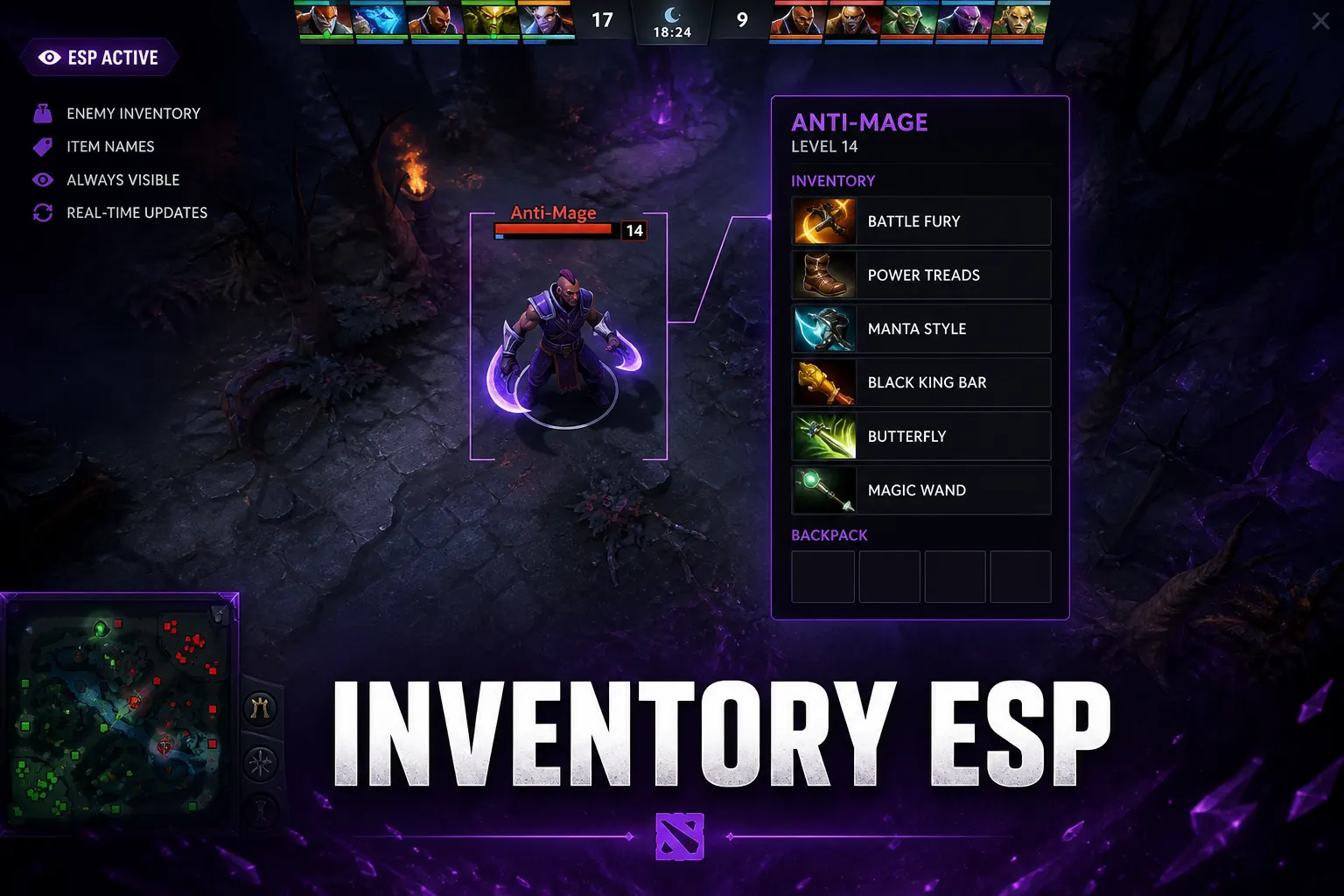
Track item timers the same way you track spell cooldowns: note when the item was purchased, calculate roughly when its cooldown or charge would come back up after use, and factor that into every fight decision from that point forward. It sounds like homework the first few games. It becomes automatic within a couple weeks of deliberate practice.
Role-specific cooldown tracking
Carries should prioritize tracking exactly one thing above everything else: the enemy's hardest disable that can lock them down during a farming cycle or a forced fight. A carry who knows the enemy stun is down can safely take a fight that would otherwise be a guaranteed death, and that single piece of information often decides whether a game-defining item finishes on schedule or three minutes late.
Mid players carry the heaviest tracking load by nature of the role, since they are usually the first to know when the opposing mid's signature spell or ultimate gets used in a rune fight or solo skirmish. Passing that information to teammates immediately, even with a simple ping or chat wheel call, multiplies its value across the whole map instead of keeping it locked in one player's head.
Offlaners should track the enemy safelane support's engage tool and the opposing carry's escape or burst cooldown, since offlane survival in the laning stage depends heavily on knowing whether a gank attempt is currently possible. Supports should track saves specifically: Force Staff, Glimmer Cape, and any healing cooldowns on the enemy team, because knowing when a save is unavailable is often the difference between a clean pickoff and a wasted initiation that gets answered instantly.
Lane stage tracking, minutes zero to ten
Early game, narrow your tracking to the specific spells that actually kill you in lane: the enemy mid's nuke, the offlane's stun, and whatever save the enemy support carries. Do not try to track everything in the enemy's kit during laning, because you will forget everything under the pressure of last hitting and denying at the same time. One accurate timer beats five approximate ones, especially in the laning stage where a single missed cooldown often means a dead hero and a lost lane.
If you are supporting, part of your job is calling "no stun" or "cooldown used" the moment the enemy offlaner burns their disable on creeps instead of a hero, since that is a free window your carry can exploit immediately. Mid players should communicate the instant the opposing mid's ultimate goes down after a failed rune contest, because that information changes whether a gank on either side of the map is safe to attempt in the next sixty to ninety seconds.
Mid game fight windows
The transition from laning into the midgame is where cooldown tracking starts paying off in objective control rather than just kill trades. Before your team commits to a tower dive, a Roshan attempt, or a forced teamfight, ask a short checklist: is their biggest disable available, is their primary save available, and is Black King Bar available on the specific hero you need to burst down first. If you cannot answer those three questions with confidence, you need more vision before you need more damage.
Midgame skirmishes around jungle stacks and side lane towers are where most pub tempo gets decided, and they are also where cooldown tracking gets sloppiest because both teams are distracted by farm efficiency. Making tracking a conscious habit during this phase, even a simple mental note every time you see an enemy hero, keeps your team from walking into avoidable trades.
Late game fight windows and high ground
High ground pushes fail constantly in pubs because a team commits smoke, positioning, and often a Buyback into a fight where the enemy's core disables and saves are all sitting fully available. Before you commit to a high ground attempt, verify that at least the two or three most dangerous enemy cooldowns are down, not just "probably down because it feels like a while since they used them." Feeling is not tracking.
Smoking into a fully available Black Hole, Chronosphere, or similar teamfight-ending ultimate is not bravery, it is a free highlight clip for the other team's stream. Late game cooldown tracking should be treated with the same seriousness as itemization, because a single missed ultimate timing at this stage of the game usually ends the match outright rather than just costing a skirmish.
Common pub fight: rune contests
Rune fights at the two-minute and four-minute marks are some of the most predictable skirmishes in pub games, and they are also where cooldown tracking pays off immediately because both sides typically have their full starting kit available. Before contesting a rune, know whether the enemy mid has used any regen or has a nuke ready, since a rune fight taken blind against a hero with a full kit is a coin flip you do not need to accept.
Later rune contests around the six and eight minute marks often decide whether a lane gets reinforced or abandoned, and tracking whether an enemy support has already rotated away from lane changes the calculation entirely. A rune fight against three heroes instead of two is not the fight you planned for, and cooldown tracking combined with basic map checking prevents that surprise more often than either habit alone.
Common pub fight: smoke initiations
Smoke ganks succeed in pubs largely because the defending team has no idea which cooldowns are available on the smoked heroes. If you track that the enemy initiator's engage tool has been on cooldown for the last few minutes based on when you last saw it used, a sudden smoke play from that direction is far less threatening than the same play from a hero whose initiation is fully charged. Cross-reference this with our ward vision guide, since vision plus cooldown tracking together catch smoke plays that neither habit catches alone.
The defending side of a smoke initiation should immediately ask which of their own saves and disables are available before deciding to fight or retreat. Teams that panic and fight blind into a smoke, without checking their own available cooldowns first, lose far more of these skirmishes than teams that take two extra seconds to check their own resources before committing.
Common pub fight: high ground pushes
High ground defense in pubs frequently comes down to whether the defending team can track the attacking team's Buyback status and ultimate availability at the same time. A push that looks unstoppable on paper often has zero Buyback gold behind it, which means a single clean pickoff during the push ends the attempt entirely regardless of the damage output on the attacking side.
Attacking a high ground position without tracking the defenders' available disables is equally risky, since a single well-timed stun from a tower-camping support can turn a five-person push into a one-sided wipe in seconds. Cooldown tracking during high ground fights should extend beyond damage-dealing spells into positioning tools like blink and teleport scrolls, since both sides frequently reinforce mid-fight in ways that change the outcome entirely.
Pairing cooldown tracking with Hero ESP
Hero ESP style overlays remove the guesswork of simply knowing where enemy heroes currently are, which is a prerequisite for cooldown tracking rather than a replacement for it. Knowing a hero's location the instant they use a visible ability lets you start the mental or literal timer immediately instead of estimating retroactively from a kill feed message several seconds later. Pair this awareness with the tracking habits in this guide and the two skills compound rather than simply adding together.
The practical workflow looks like this: spot the hero, note the ability used and the time, calculate the return window, and communicate it if it affects a teammate's decision. Doing this consistently across a full game, even imperfectly at first, builds the same pattern recognition that experienced players describe as "just knowing" when a fight is safe.
A weekly practice drill for cooldown tracking
Pick three games a day for one week. Before first blood happens in each game, write down the three spells you plan to track based on the draft. After the game ends, score yourself honestly: how many times did you actually play the resulting window correctly, either by pushing aggression when a cooldown was down or by holding back when it was up. Do not track your MMR change for that week specifically, track your honesty score instead, since the habit matters more than any single game's result.
Public match data on Dotabuff can show you death timing patterns and general fight outcomes across your match history, which is useful for spotting recurring mistakes. It cannot show you whether you personally knew a specific cooldown was down at the moment you made a decision, and that self-honesty piece is entirely on you to track during the drill week.
Tools that help without replacing judgment
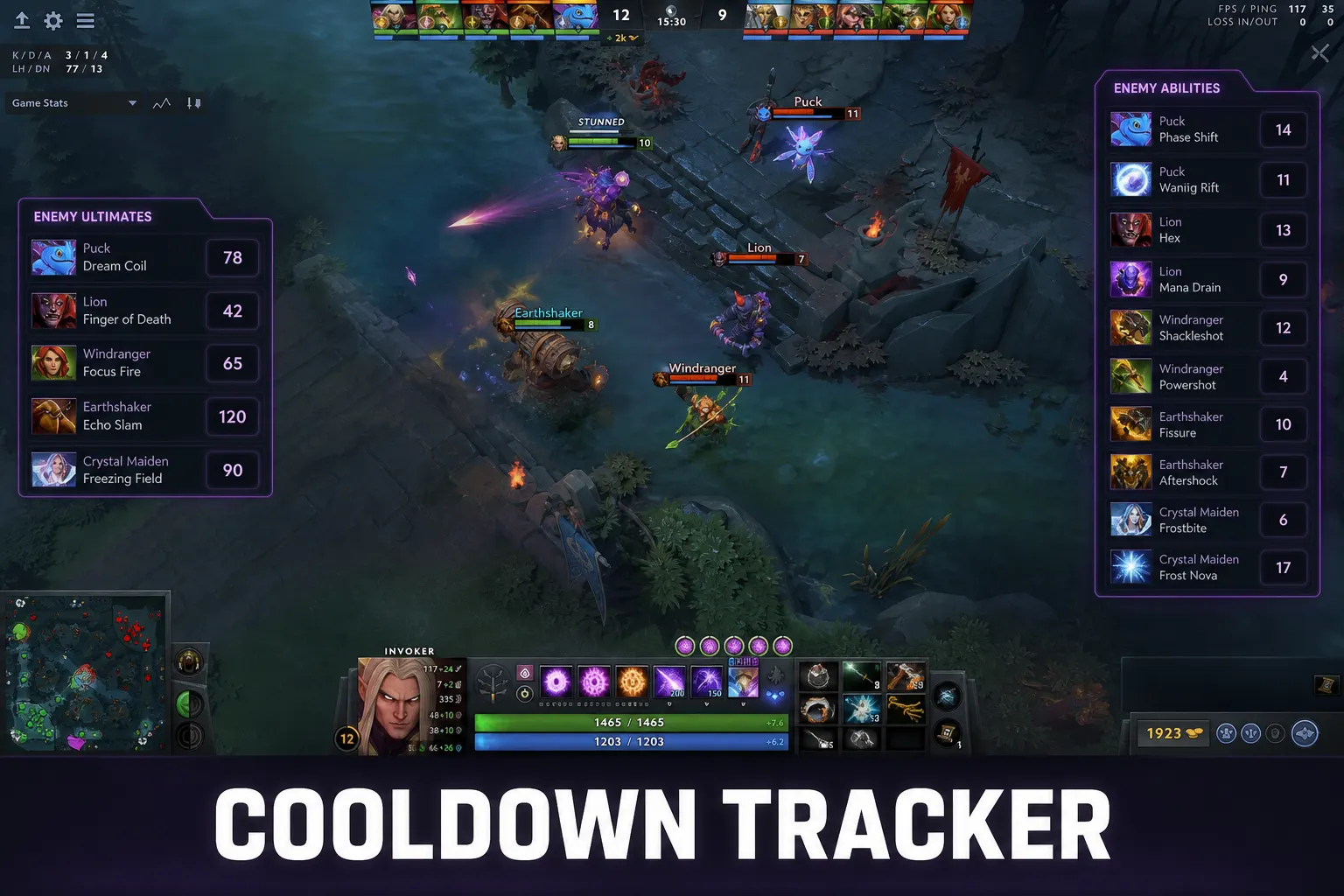
The cooldown tracker feature on DOTA2 Cheats features exists because the gap between "I can see the enemy hero on my screen" and "I know exactly what they can cast in the next eight seconds" is enormous in ranked pubs, and that gap is precisely where most avoidable deaths happen. Use a tool like this to train the underlying pattern recognition, then verify against your own notes and match review so the skill actually transfers when you are not running any overlay at all.
Want to see the overlay in action before deciding whether it fits your practice routine? The demo page has screenshots and footage showing exactly how cooldown information displays in a live match. Setup questions, licensing, and compatibility details all live on our FAQs page if you decide to try it.
Tracking ultimates that scale with time or stacks
Some abilities do not follow a simple used-then-recharging pattern, and treating them like a standard cooldown produces bad predictions at exactly the moment you need good ones. Ultimates that build up over time, gain bonus effects from stored charges, or scale in strength based on how long they have been available require a slightly different mental model than a flat cooldown timer, since the danger level of the ability changes even while it sits unused.
The practical fix is tracking two numbers instead of one for these specific abilities: whether the ability is available at all, and roughly how much bonus value it has accumulated since it last saw use. A hero who has been holding a stacking ultimate for several minutes without using it is telegraphing a bigger commitment than the same hero using it the moment it becomes available, and reading that pattern correctly tells you whether an unusually quiet enemy hero is farming peacefully or setting up a specific play.
Charge-based abilities, where a hero accumulates multiple uses of the same spell over time, need tracking that accounts for partial availability rather than a binary up or down state. A hero with one charge remaining out of two is a meaningfully different threat than a hero with zero charges, and pub players who track these abilities as simply "has it or does not" miss the nuance that often decides whether a specific trade is safe to take.
Using the kill feed and death timers as tracking tools
The kill feed at the top of the screen is a free, constantly updating source of cooldown information that many pub players glance past without extracting any value from it. Every kill and every ability used in a visible fight gives you a timestamp you can work backward from, and building the habit of quickly noting "that ultimate just got used, it comes back around this minute" turns a passive UI element into an active tracking tool.
Death timers deserve the same attention from a tracking perspective, not just from a "safe to push now" perspective. A dead enemy hero cannot use their cooldowns, which sounds obvious, but pub players frequently forget to factor a long respawn timer into their read of how dangerous a specific fight window actually is. A five person push against a team missing their core disable to a lengthy respawn timer is a fundamentally different risk profile than the same push against a full enemy lineup, even if the net worth numbers look similar.
Cooldown tracking starts in draft and pick phase
The habit of tracking cooldowns does not start when the creeps spawn, it starts the moment you see the enemy draft taking shape. Identifying which three abilities are going to matter most for your specific matchup during the pick phase means you walk into the game already knowing what to watch for, rather than figuring it out reactively during the first messy teamfight.
Drafts with a heavy reliance on a single powerful ultimate are easier to track but more punishing if you get the timing wrong, since the entire enemy strategy often revolves around that one cooldown being available. Drafts with multiple moderate threats spread across several heroes require broader but shallower tracking, since no single cooldown carries the same game-ending weight but the cumulative threat from several available abilities at once can still overwhelm a team that is only watching one thing.
Common cooldown tracking mistakes by MMR bracket
Herald and Guardian games usually show no cooldown tracking at all, with fights decided purely by whoever clicks their abilities first rather than by any read of what the enemy has available. The improvement at this bracket is simply starting the habit, even imperfectly, since any tracking at all outperforms none.
Crusader and Archon players often track spells but forget items entirely, reacting with correct spell timing while still getting blindsided by a completed Black King Bar or a fresh Blink Dagger that changed the fight geometry without any spell involved at all.
Legend and Ancient games show reasonably consistent individual tracking but weak communication of that information to teammates, meaning one player's correct read does not translate into a coordinated team decision. Divine and Immortal pubs generally track well individually and communicate reasonably, but occasionally overtrust a tracked cooldown without accounting for a hero swap, a new item purchase, or a talent choice that altered the expected timing mid-game.
Putting it all together
Cooldown tracking is not a single trick, it is a stack of small habits: the three-spell rule to keep focus manageable, item timers tracked with the same discipline as spells, role-specific priorities so you are not trying to track everything at once, and a weekly honesty drill to keep the habit sharp. Combine it with the ward vision guide so the information you gather actually reaches your decisions in time to matter. None of this guarantees a win. It does guarantee that your losses stop feeling random and start feeling like specific, fixable mistakes.